
Visual assessment of LIMPET tag site healing in Cuvier’s beaked whales and fin whales
Barra lateral del artículo
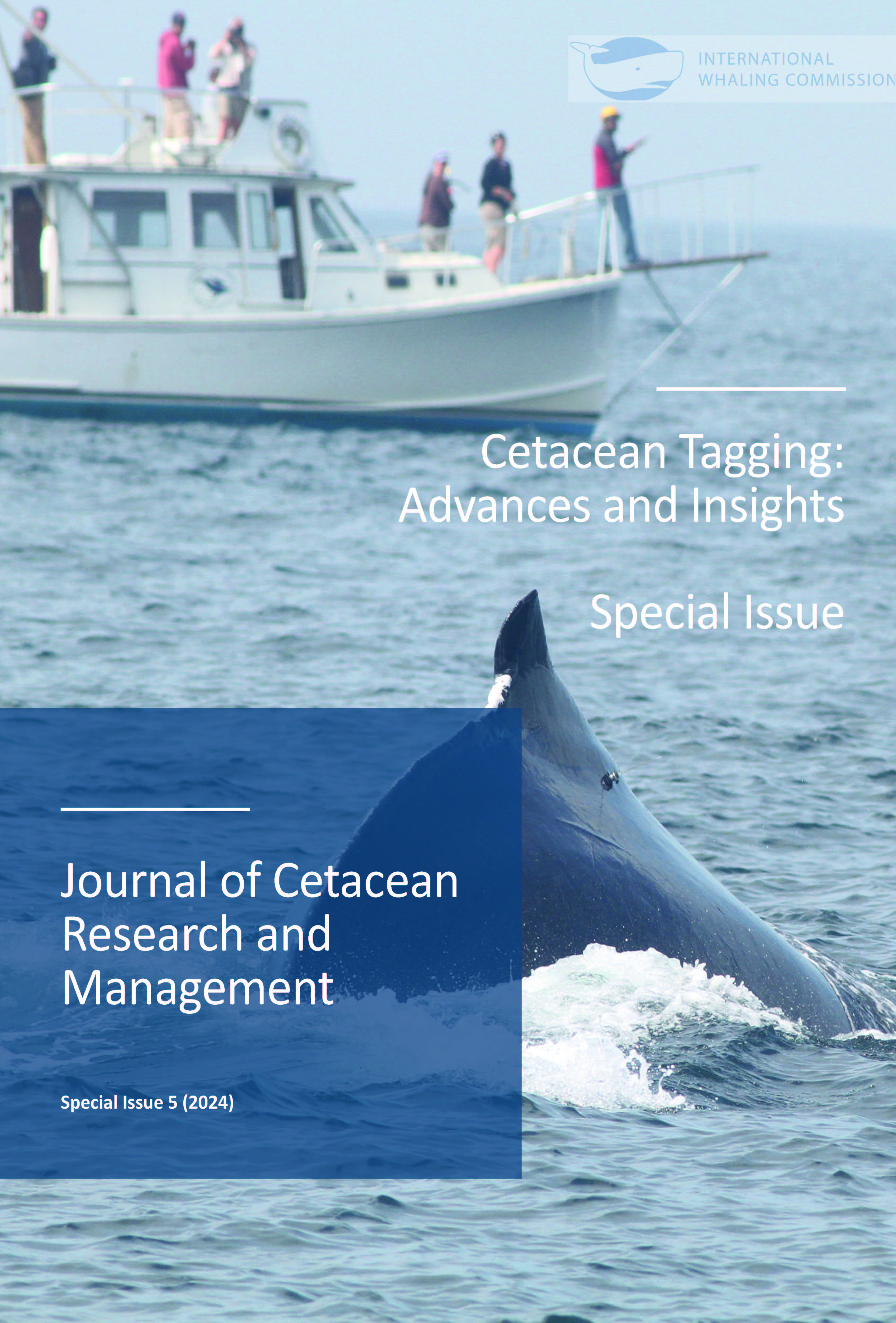
Contenido principal del artículo
Resumen
Implanted or anchored telemetry devices are valuable tools in cetacean research, especially for species whose habitats and ranging patterns limit the collection of movement and behavioural data by less invasive methods. In this study, 130 Low‐Impact Minimally Percutaneous External Transmitter (LIMPET) tags were deployed on Cuvier’s beaked whales and fin whales. LIMPET tags are small Type A (anchored) tags which are remotely deployed and secured on or near the dorsal fin using medical‐grade titanium darts. They transmitted data via satellite for weeks to months (mean = 34 days, range 1–239 days). Most of these tagged whales (n = 123) were photo‐identified at deployment. Sixty‐one were photographed after tag loss, with the proportion of the resighted tagged whales meeting or exceeding the inter‐annual resighting rates of their populations. Thirty‐seven resighted whales (16 fin and 21 beaked) had adequate quality photos of the attachment site for visual assessment of healing on at least one day, over periods from 1–4,779 days (13.1 years) after the end of tag transmission. Most tag sites had resolved as one or two small (< 2 cm) marks or shallow depressions within 2–3 years. LIMPET tags placed outside the dorsal fin (n = 34) had significantly shorter transmission durations but were not associated with larger residual marks. Swelling, a notable concern in other tag follow‐up studies, was observed in five whales, three of which were sighted with retained darts that had separated from the external tag package. It took 2–4 years to shed these retained darts. In two cases, the darts appear to have migrated through the fin and exited on the contralateral side. Retention petals from LIMPET tag darts may be left behind; if so, results suggest they are likely encapsulated or ejected without leaving a visible mark. These findings suggest that LIMPET tags are generally a safe and effective option for collecting extended movement and behavioural data from these and similar species.
Detalles del artículo

Esta obra está bajo una licencia internacional Creative Commons Atribución-NoComercial 4.0.
You are free to:
- Share copy and redistribute the material in any medium or format
- Adapt remix, transform, and build upon the material
- The licensor cannot revoke these freedoms as long as you follow the license terms.
Under the following terms:
- Attribution You must give appropriate credit, provide a link to the license, and indicate if changes were made. You may do so in any reasonable manner, but not in any way that suggests the licensor endorses you or your use.
- NonCommercial You may not use the material for commercial purposes.
- No additional restrictions You may not apply legal terms or technological measures that legally restrict others from doing anything the license permits.